
Introduction
The integumentary system is the outer protective covering of vertebrates, comprising the skin and its derivatives (scales, feathers, hair, glands, claws, etc.).
Key Functions:
- Protection: Against pathogens, UV radiation, and mechanical damage.
- Thermoregulation: Insulation and sweat gland activity (mammals).
- Sensation: Nerve endings detect touch, temperature, and pain.
- Excretion: Sweat glands eliminate waste (mammals).
- Camouflage & Communication: Colour changes, plumage displays.
I. Comparative Structure of Vertebrate Integument
A. Fishes
- Epidermis: Thin, mucous-secreting cells reduce drag.
- Dermis: Contains scales (placoid, ganoid, cycloid, ctenoid).
- Specializations:
- Placoid scales (sharks): Tooth-like, reduce turbulence.
- Chromatophores: Enable color change (e.g., camouflage).
B. Amphibians
- Epidermis: Thin, keratinized; highly permeable for cutaneous respiration.
- Dermis: Contains mucous glands (prevent desiccation) and poison glands (defense).
- Specializations:
- Aquatic larvae: Mucous-covered, lack scales.
- Terrestrial adults: Develop keratin in some regions.
C. Reptiles
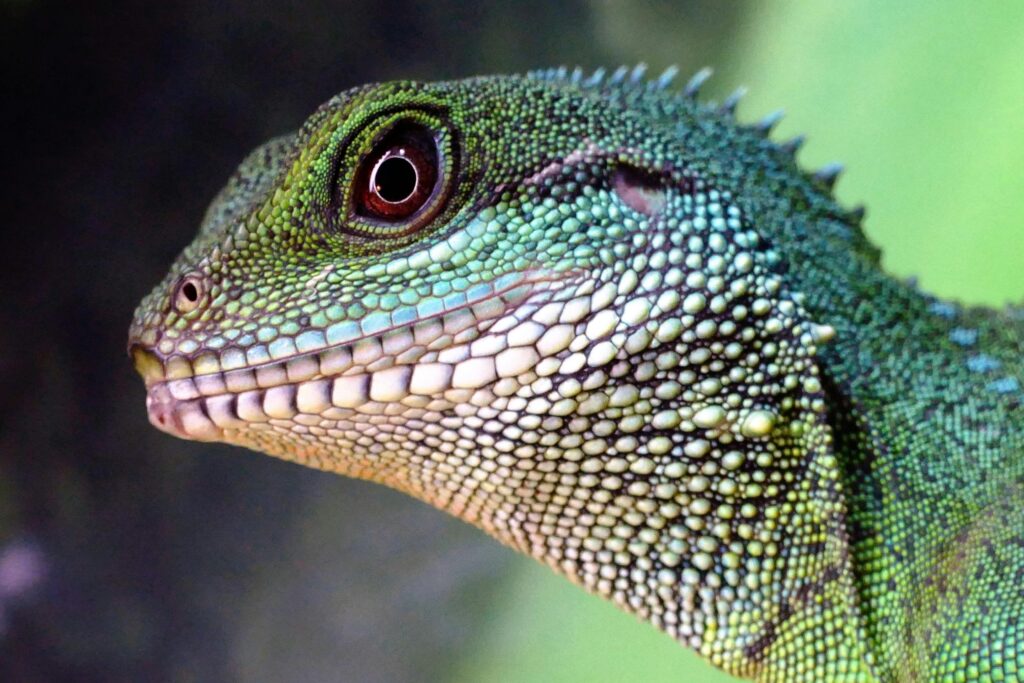
- Epidermis: Thick, keratinized scales (prevent water loss).
- Dermis: Osteoderms (bony plates in crocodiles, armadillos).
- Specializations:
- Moulting (Ecdysis): Periodic shedding (snakes, lizards).
- Scute Variation: Turtle shells (modified ribs + keratin).
D. Birds
- Epidermis: Thin, covered with keratinized feathers.
- Dermis: Anchors feather follicles; uropygial gland (preening oil).
- Specializations:
- Feather Types: Contour, down, filoplumes.
- Scales on Legs: Derived from reptilian ancestors.
E. Mammals
- Epidermis: Stratified layers (stratum corneum for abrasion resistance).
- Dermis: Contains hair follicles, sweat glands, and sebaceous glands.
- Specializations:
- Hair: Insulation, sensory vibrissae (whiskers).
- Glands: Eccrine (cooling), apocrine (pheromones), mammary (lactation).
II. Major Evolutionary Milestones
A. Early Vertebrates (~500 MYA)
- Origin of Dermal Armor: Osteostracans (jawless fish) had bony head shields.
- Placoderms: Thick, armored plates for defense.
B. Transition to Land (~375 MYA)
- Amphibians: Evolved mucous glands to prevent desiccation.
- Keratinization: First appeared in early tetrapods.
C. Amniote Innovations (~320 MYA–Present)
- Reptiles: Scales and moulting for arid environments.
- Feathers: Evolved from reptilian scales for insulation → flight (birds).
- Mammals: Hair and glandular diversity for endothermy.
III. Functional Adaptations
Conclusion
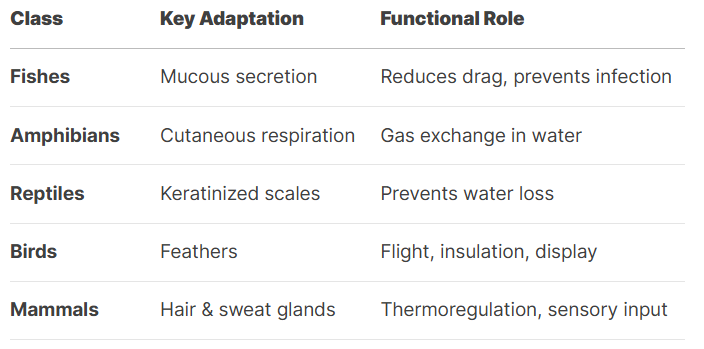
The vertebrate integumentary system reflects adaptive radiation across habitats: i) Fishes: Streamlined scales for aquatic life, ii) Amphibians: Permeable skin for bimodal respiration, iii) Reptiles/Birds: Keratinized appendages (scales → feathers), and iv) Mammals: Hair and glands for endothermy and social signaling.
Introduction
The integumentary system is the outer protective layer of vertebrates, consisting of the skin and its derivatives. It serves as the first line of defense against environmental challenges, including pathogens, UV radiation, and physical trauma. Beyond protection, the integument plays critical roles in:
- Thermoregulation (e.g., sweat glands in mammals, feather fluffing in birds).
- Sensory perception (e.g., tactile receptors, electroreception in fish).
- Communication (e.g., colourful plumage in birds, pheromone release in mammals).
- Locomotion (e.g., scales reducing drag in fish, hooves in ungulates).
This lecture explores the structure of the integument and its diverse derivatives across vertebrate classes, highlighting evolutionary innovations from fishes to mammals.
I. General Structure of Vertebrate Integument
The integument is composed of three primary layers:
A. Epidermis
- Outermost layer, derived from ectoderm.
- Keratinocytes produce keratin, a tough protein for waterproofing and strength.
- Stratified squamous epithelium in tetrapods; thinner in aquatic vertebrates.
- Specialized cells: Melanocytes (pigment), Langerhans cells (immune defense).
B. Dermis
- Middle layer, derived from mesoderm.
- Collagen and elastin fibers provide elasticity and tensile strength.
- Vascularized, supplying nutrients to the epidermis.
- Houses sensory receptors, glands, and structural derivatives (e.g., scales, feathers).
C. Hypodermis (Subcutaneous Layer)
- Innermost layer, composed of adipose tissue and loose connective tissue.
- Functions: Insulation, energy storage, and shock absorption.
II. Derivatives of the Integument Across Vertebrates
A. Fishes
1) Scales
- Placoid Scales (Denticles): Found in cartilaginous fish (e.g., sharks).
- Structure: Tooth-like, with enamel-covered dentine.
- Function: Reduce drag, protect against abrasion.
- Ganoid Scales: Found in primitive bony fish (e.g., gars).
- Structure: Rhomboid-shaped, coated with ganoin.
- Function: Armour-like protection.
- Cycloid/Ctenoid Scales: Found in teleosts (modern bony fish).
- Structure: Thin, flexible, overlapping.
- Function: Allow flexibility while maintaining protection.
2) Glands
- Mucous Glands: Secrete slime to reduce friction and deter parasites.
- Poison Glands: Found in some species (e.g., stonefish) for defense.
3) Chromatophores
- Pigment-containing cells enabling colour change for camouflage or communication.
B. Amphibians
1) Skin
- Highly permeable for cutaneous respiration.
- Lacks scales (except in caecilians which have scales embedded in the dermis).
2) Glands
- Mucous Glands: Keep skin moist for gas exchange.
- Poison Glands: Produce toxins (e.g., bufotoxins in toads).
3) Keratinization
- Limited keratin in terrestrial species to prevent desiccation.
C. Reptiles
1) Scales
- Keratinized, overlapping scales prevent water loss.
- Scutes: Thickened scales in turtles and crocodiles.
2) Moulting (Ecdysis)
- Periodic shedding of the epidermis (e.g., snakes).
3) Osteoderms
- Bony deposits in the dermis (e.g., armadillos, crocodiles).
4) Glands
- Scent Glands: For territorial marking (e.g., snakes).
D. Birds
1) Feathers
- Contour Feathers: For flight and streamlining.
- Down Feathers: Insulation.
- Filoplumes: Sensory function.
2) Scales
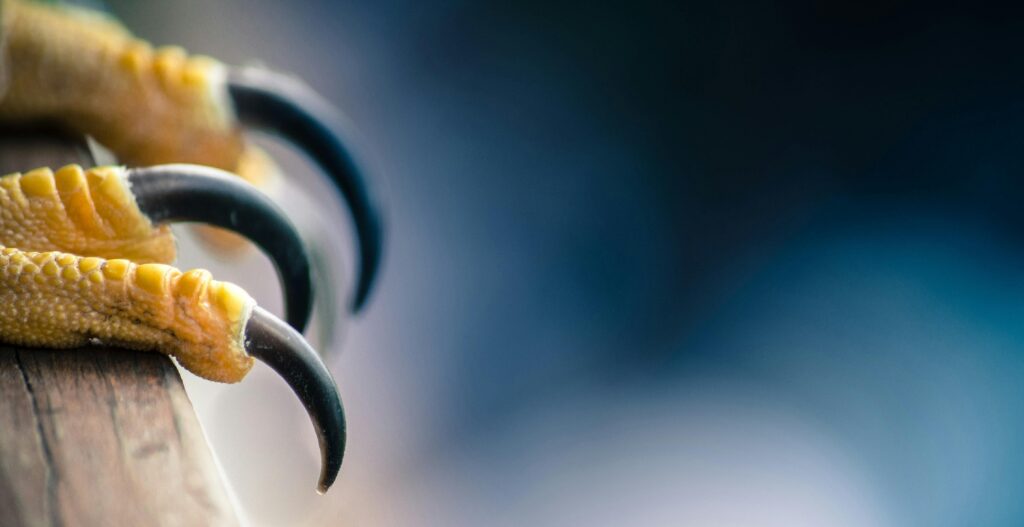
- Keratinized scales on legs (reptilian heritage).
3) Glands
- Uropygial Gland: Secretes oil for feather maintenance.
E. Mammals
1) Hair
- Functions: Insulation, camouflage, sensory (vibrissae).
- Types: Guard hairs, underfur, quills.
2) Glands
- Sebaceous Glands: Produce oil (sebum).
- Sweat Glands: Thermoregulation (eccrine) and pheromone release (apocrine).
- Mammary Glands: Milk production.
3) Nails, Claws, Hooves
- Keratinized structures for manipulation, defense, or locomotion.
4) Horns and Antlers
- Horns: Permanent, keratinized (e.g., cattle).
- Antlers: Deciduous, bony (e.g., deer).
III. Functional Adaptations of Integumentary Derivatives
IV. Evolutionary Milestones in Integumentary Specializations
- Origin of Dermal Armour (~500 MYA): Early jawless fish (ostracoderms) had bony plates.
- Keratinization (~375 MYA): Tetrapods developed keratin to prevent desiccation on land.
- Feather Evolution (~160 MYA): Theropod dinosaurs developed feathers for insulation, later adapted for flight.
- Hair Evolution (~200 MYA): Synapsids developed hair for endothermy.
- Gland Diversification (~100 MYA–Present): Mammals evolved sweat, sebaceous, and mammary glands.
Conclusion
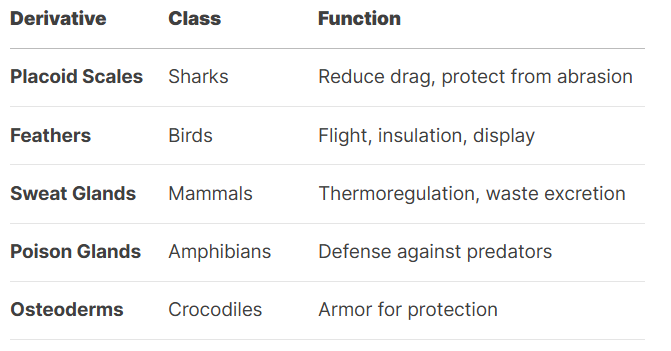
The integument and its derivatives showcase remarkable evolutionary innovation, from the armoured scales of ancient fish to the insulating fur of mammals. Key trends include: i) Increased structural complexity (scales → feathers → hair), ii) Diversification of glands for novel functions (e.g., lactation), and iii) Specialization for terrestrial life (keratinization, sweat glands).